Marco van der Werf
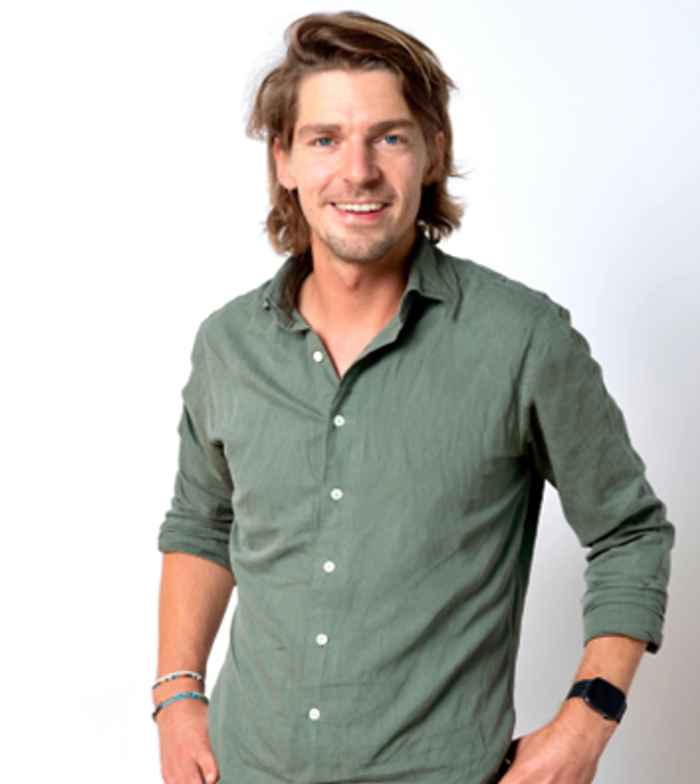
How did you come up with the idea to become a REC Impact Fellow at UvA?
After a decade building an AI company, I realised the next phase of my work had to be upstream - shaping how people think, not just what they build.
I was teaching at TU Delft when I was approached by Erik [Boer, director of REC Impact]. My company does R&D consultancy in AI for corporations. We work with the boards of large companies, from Philips to the Port of Rotterdam. We help answer the questions that arise as new technology develops: what will change and how does that affect your business? I found that what was more important is what won’t change. I started thinking about what shape the [REC Impact] Fellowship could take, and two directions kept coming back. They’re quite different, but complementary.
The first is about connecting the dots - teaching students to create better futures by linking technology to how people act within society. It’s the space between imagination and execution: understanding how the world evolves and how to actually build toward those futures.
The second is about what doesn’t change - the enduring ideas that shape how we think and act. Students can read works here and afterwards we can host sessions to challenge and extend them. Not just summarising a book like The 7 Habits of Highly Effective People, but asking “What's the 8th habit?”.
One track looks outward: how technology, society, and human behaviour shape the world that’s coming. The other looks inward: the timeless ideas that keep us grounded as things accelerate.
This is what I would like to explore as a REC Impact Fellow. If Connecting the Dots is about what’s changing, then What Doesn’t Change is about what’s worth keeping. Together, they form two halves of one question every student should learn to live with: How do we build a better future — without losing what makes us human?
What was your first experience on campus?
My company was based at Science Park, but this opportunity is my first time at the Roeterseiland campus. What I’ve always loved about being at universities is that it is always about being right. It’s not about being acknowledged as correct or being the best, like in a corporate hierarchy. In universities, people are trying to chase facts through research. I think campuses, especially Roeterseiland, is one of the few places where people still care about what is right.
What do you hope the Fellowship will bring you?
I would be a really happy man if, next to typical studies, there could be a track where students can study what will not change in the world. I feel like that is missing. We are so focused on what will change and learn those things in order to predict how things will shift. I think it’s a great secondary skill, maybe even a basic skill, to see what will not change. If you know the constants, the variations are easier to predict. Especially with AI: what won’t AI change? Empathy, creativity, entrepreneurship - those will still be human skills. As an individual, if you don’t know how to navigate the world as it’s moving really fast, it helps to return to those skills of empathy and creativity.
I recently sold my company, so I’m in a phase where I’m not sure what comes next. One thing that doesn’t change is getting smart people to work on important problems, especially at universities. I also think it’s time for Amsterdam to rediscover ourselves in the world. Amsterdam has always been a city full of different kinds of thinking clashing together to create new ideas, but we’ve lost that a little bit. Thinking differently has become more of a way to get pushback. I hope by laying better fundamentals, we can also accept our differences a little better.