Agustín Gutiérrez Salmerón
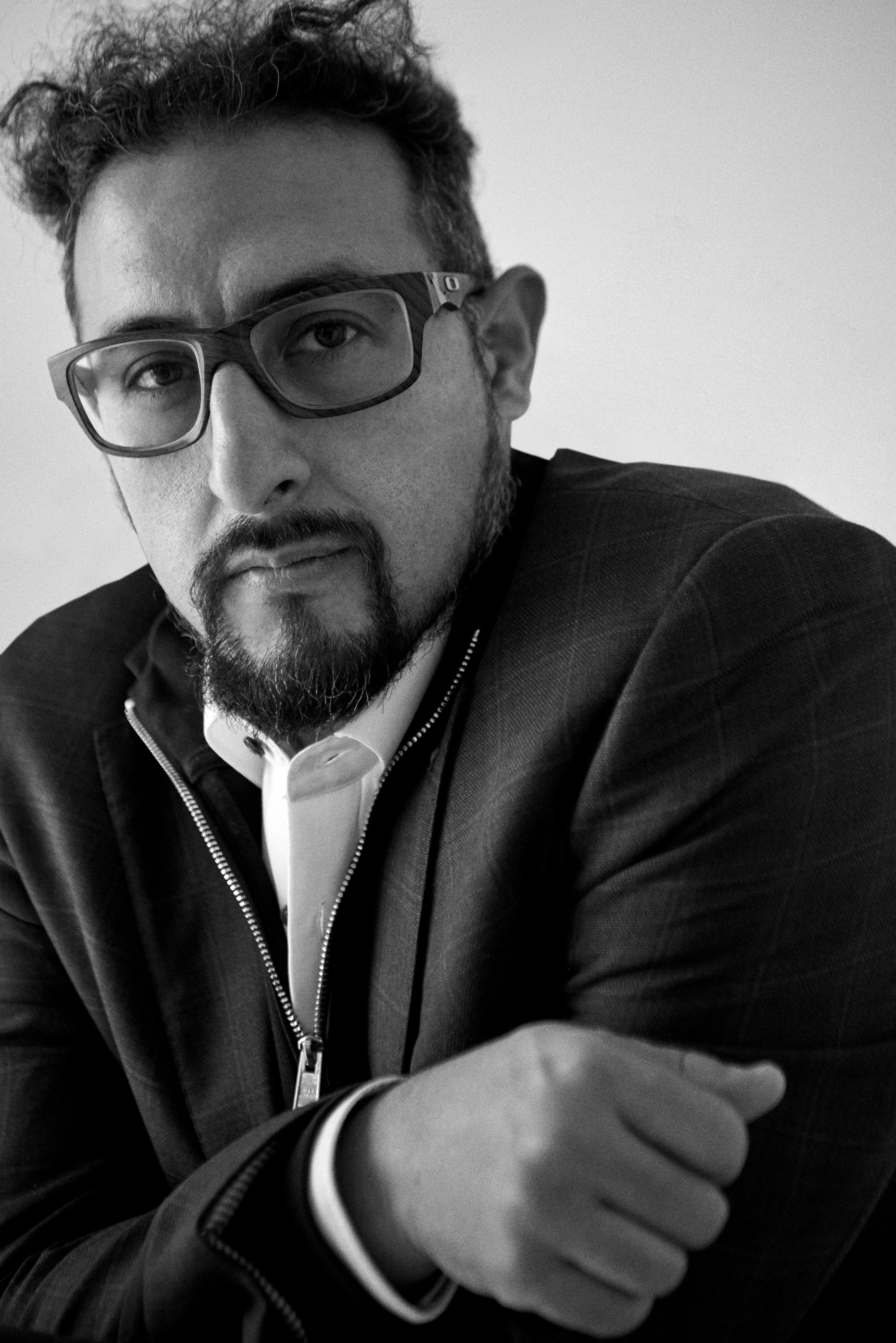
Agus Gut (Agustín Gutiérrez Salmerón) is an international producer and director of operations with more than 20 years of experience across film, television, live entertainment, broadcast and large-scale events.
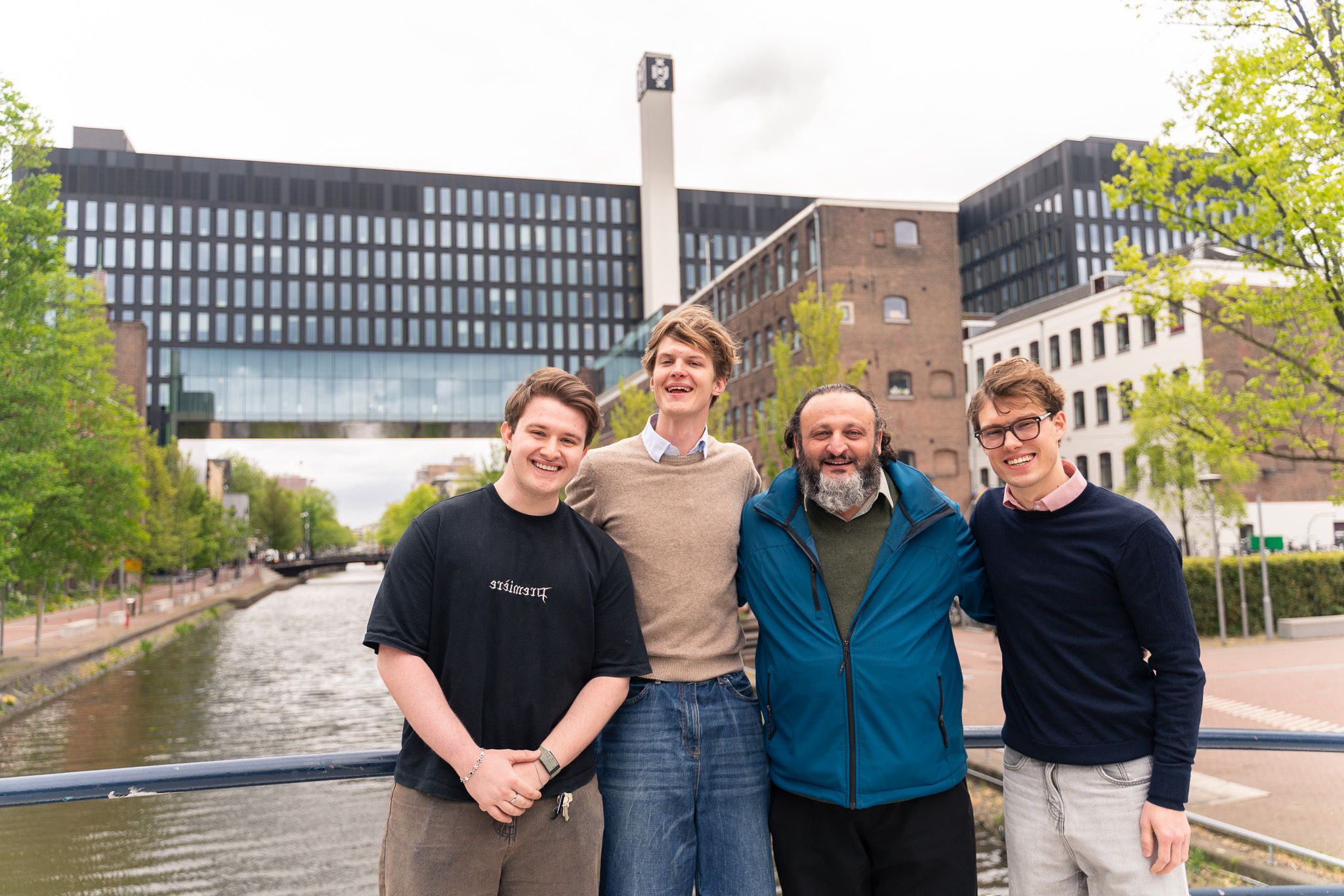
How did you come up with the idea to become a REC Impact Fellow at UvA?
'It started with a conversation with Mark Siebert, and the idea resonated because it reflects multidisciplinary people and the interaction between fellows. I studied Mathematics and Computer Science before moving into Social Psychology, and eventually built a career in international production, entertainment, technology and operations. Looking back, none of those paths were disconnected. They continuously informed one another.
I also remember a principle from my years at UNAM, the National Autonomous University of Mexico: a university should be universal. As I grew older, I came to understand that idea more deeply. A university is not only a place to specialize; it is also a place where knowledge, culture, disciplines, backgrounds and different ways of thinking are allowed to meet.
That is why a program like REC Impact immediately made sense to me. It opens the university to trajectories that do not fit neatly into one discipline or professional category, and it creates space for people who are multidisciplinary, multicultural and shaped by very different worlds.
My father, a mathematician, dedicated his professional life to UNAM, so academia, public knowledge and contributing to a wider community have always felt close to home.
What excites me most about the Fellowship is that it embodies that broader idea of a university: a community where diversity of knowledge and experience can generate new connections, new work and measurable impact.
I am very happy to be part of a fellowship that, in its own name, already carries that idea of belonging, exchange and community.
What was your first experience on campus?
My first impression was actually physical. While walking through Amsterdam, I suddenly realized I was already on campus. There was no clear boundary, no wall, no gate, no moment where the city stopped and the university began.
That reminded me of the idea of a Ciudad Universitaria: a place that is open, permeable and part of the life around it. I think that sense of openness says something important about what a university should be.
I was also struck by the quality of the infrastructure, facilities and opportunities at a public school. The possibility of creating communities like REC Impact, and giving people access to interdisciplinary spaces like these, is genuinely impressive to me.
It reminded me of what I find beautiful about universities: people studying, questioning, connecting ideas and becoming more knowledgeable, not only for their own benefit, but often in ways that eventually contribute to society, culture and other people.
Mark listened to my story and began drawing three overlapping circles on a piece of paper. I had always understood the relationship between my background in Mathematics, Computer Science, Social Psychology and my professional life in international production, film and events.
But he identified another dimension, another possible area of convergence that I had not fully articulated myself: communication.
So, let’s start communicating.
What do you hope the Fellowship will bring you?
I hope the Fellowship will allow me not only to return to academia, but to become an active participant in education, knowledge creation and university life.
My most immediate contribution is through entertainment. I have an international profile in live events, film, television, broadcast and large-scale or mega-events, and I believe students, whether in MBA programs, film, media or other creative fields, need direct exposure to how radically the entertainment industry is changing.
The last few years have transformed the sector dramatically, and I am convinced the next five will change it even further. AI, streaming, multimedia ecosystems colliding, new production technologies, global platforms, global television, freelance structures, content creators and new business models are all converging.
I want to bring a current practitioner perspective to that conversation and help students and faculty understand not only how the industry works today, but where it is going.
At the same time, I hope the Fellowship helps me become more deeply rooted in Amsterdam and more connected to its academic, creative and professional communities. I would like to build collaborations, meet people from other disciplines and eventually develop joint projects and new forms of cooperation between university and industry.
A second ambition is to advance my research in Social Psychology. I have long been interested in extreme closed groups, coercive dynamics and the mechanisms through which individuals lose autonomy and independent judgment.
I would like to connect with researchers in Social Psychology, Sociology and related fields to develop that work more rigorously and collaboratively.
The third area is the one Mark helped me articulate more clearly: the intersection between Computer Science, Social Psychology, communication and AI.
With my Computer Science background, I use AI extensively and natively, but I also believe we are reaching a threshold where questions of ethics, governance, responsibility and human agency can no longer be postponed.
We need to understand how these systems affect communication, institutions, behavior and decision-making, and how we can develop responsible frameworks around their use.
For me, this is where the Fellowship becomes especially powerful. These questions cannot be addressed from one discipline alone. They require community, dialogue and people from very different fields working together.
What I hope to bring is a bridge between worlds: experience from major international entertainment and technology environments, combined with an academic interest in human behavior, ethics and social systems.
Ultimately, I hope the Fellowship becomes a space where practice and academia can genuinely meet, and where that convergence can generate useful knowledge, new models and real impact.’